 Eustis Estate
Charles Bowie
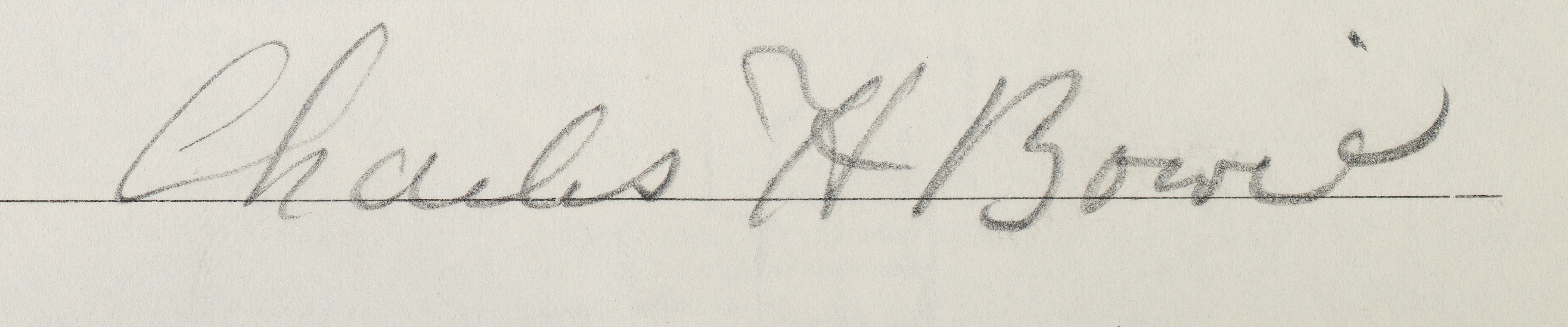
Signature from Charles Bowie’s paystub, 1915. There are no known photographs of Charles.
Charles Bowie was the butler for the Eustis Estate from 1904-1928, though he started working for Mary Hemenway, the mother of Edith Eustis, in the 1880s. His story started, however, far away from the streets of Beacon Hill in Boston. Charles was born in 1860 in Maryland and his family had likely been enslaved by the prominent Bowie family which included Maryland’s thirty-fourth governor, Odin Bowie. The Bowies enslaved large numbers of people at their Bellefield, Fairview, and Mattaponi plantations in Prince George’s County between 1810 and 1865. Charles was raised at or near one of these properties though it is unclear if he was enslaved. Due to changes in agricultural production in the area over the course of the nineteenth century, Maryland’s enslavers sometimes freed their enslaved workers and hired them seasonally rather than paying for their care year-round. By the time Charles was born in 1860, plantation work was often done by paid Black and white workers alongside those who were enslaved.
Charles arrived in Boston in the early 1880s; he had left his parents and siblings in Maryland and traveled alone to New England seeking domestic work. In the early 1880s he found work in several hotels and private homes as an “inside man,” a term that implied a variety of tasks within one position, from janitorial to butlering. In 1888, Charles published an advertisement in the Boston Evening Transcript seeking his next position which read, “Situation wanted by a young colored man as first-class inside man in private family: best of city references; will go to the country. Apply for two days at 110 Dartmouth.”

This advertisement may have been answered by wealthy widow Mary Hemenway, because shortly afterward Charles began working at her home on Beacon Hill, 40 Mt. Vernon Street.